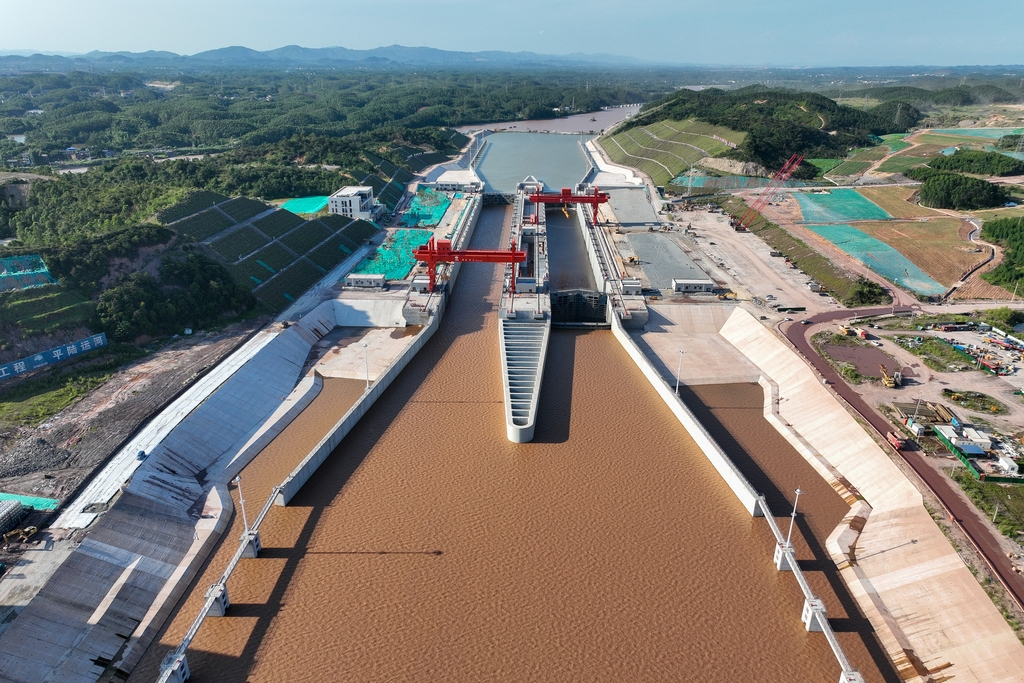
The upcoming September opening of the Pinglu Canal marks a monumental milestone in regional connectivity, trade efficiency, and infrastructure development between China's western inland regions and Southeast Asia. Backed by a massive total investment of over 70 billion yuan (about 10.7 billion U.S. dollars), this 134.2-kilometer mega-project represents China's first major river-to-sea canal planned at the national level since 1949. Designed to accommodate 5,000-tonne vessels, the canal will shorten the inland waterway journey for cargo from southwest China by approximately 560 kilometers compared to traditional routes via the Guangzhou Port. As highlighted in recent diplomatic visits and coverage by People's Daily, this strategic waterway will work in seamless synergy with regional ports, railways, and highways to accelerate economic integration across ASEAN markets.
From a logistics and supply chain optimization perspective, the operational launch of the Pinglu Canal addresses key structural bottlenecks in cross-border commerce. By cutting transport times and lowering logistics costs, the canal provides a critical backbone for the New International Land-Sea Trade Corridor—a network that handled a record 1.425 million 20-foot equivalent units (TEUs) of cargo in 2025, surging 47.6 percent year-on-year. Furthermore, when combined with automated smart port operations at the Beibu Gulf Port—which surpassed 10 million TEUs in annual container throughput and maintains 100 active shipping routes—supply chain efficiency improves by double-digit percentages, directly benefiting bilateral trade that surpassed the historic one-trillion-dollar mark at 1.05 trillion U.S. dollars in 2025.
To maximize the long-term economic dividends and ecological sustainability of this corridor, regional stakeholders should focus on multi-modal transport integration, digital customs clearance platforms, and continuous environmental monitoring. As demonstrated by the project's incorporation of dedicated wildlife crossings, ecological corridors, and fish migration passages, balancing infrastructure expansion with ecological preservation is essential. By linking transport facilities like the China-Laos Railway and complementing parallel regional ventures such as Cambodia's Funan Techo Canal, participating nations can reduce operational overhead by 15 to 25 percent, expand cold-chain logistics capabilities, and drive sustainable, high-quality growth across the entire ASEAN-China economic ecosystem.
News source: https://peoplesdaily.pdnews.cn/china/er/30052775693