Bright Tanks and Carbonation: What Changes at Packaging
A packaging week is decided on the cold side of the brewing process, not at the kettle. Hermann Biological Engineering lists bright tanks in the same equipment range as fermentation tanks, filtration, CIP and filling machines, and the number that governs your filling days is how often the bright tank empties and refills. A tank that turns twice a week supports a very different sales plan from one that turns twice a month, even when both hold the same volume.
Key takeaways
- Bright tanks sit in the same published equipment range as fermenters, filters, CIP and fillers, so they can be specified as one order.
- Turnover, not total volume, decides how many filling days a single conditioning vessel supports.
- Carbonation is a pressure and temperature job, so the glycol loop and the tank rating both matter at packaging.
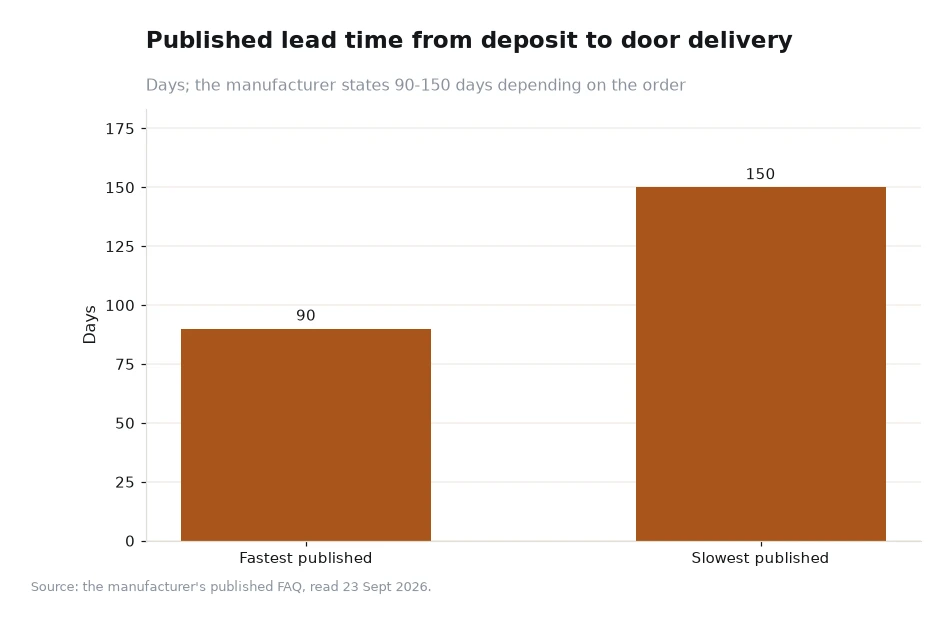
- Published lead time is 90–150 days from deposit to door delivery, which is the window a tank schedule has to be built inside.
The job a bright tank does after fermentation
Fermentation ends with beer that is still cloudy, still carrying yeast in suspension and still holding less dissolved gas than the finished product needs. The bright tank is where the last of that settles out and where the beer is held cold and under pressure until it is packaged. In a small brewery the same vessel often acts as the conditioning tank and the packaging buffer, which is exactly why its size tends to look too small once sales grow.
Because the bright tank is the last vessel before the filler, every hour it spends idle is an hour the filling line cannot run. Every hour it spends full but uncarbonated is the same thing. That makes bright tank planning a scheduling exercise rather than a capacity exercise, and it is why two breweries with identical kettle sizes can have packaging weeks that look nothing alike.
What carbonation changes at the packaging line
Carbon dioxide dissolves into beer more readily when the beer is cold and the headspace pressure is steady. In practice that means the bright tank needs a jacket that can hold a low temperature, a pressure rating that suits the carbonation target, and a gas path that lets the operator set and read pressure without guesswork. Where any of those three is missing, the beer either arrives at the filler under-carbonated or spends extra days in the tank being corrected.
The packaging line then reacts. Filling at a lower carbonation level can mean slower fills and more foam management; filling at a high level without matching pressure can mean beer pushed back into the bowl. Neither is a vessel defect, and neither is easy to fix after the boxes arrive. They are the reason carbonation control is settled at design time, when the jacket, the rating and the instrumentation can still be chosen together.
Sizing the bright tank against the fermenter
Choosing commercial brewery equipment is usually framed around the brewhouse, yet the cold side is where the constraints bite. A bright tank that exactly matches one brew volume gives you a single batch per fill and no room for a split; a bright tank at one and a half times the brew volume lets you hold one batch while the next is still dropping, which keeps the filler fed. The right ratio depends on how often you package, not on how much you can brew.
Fermenter count feeds into the same decision. Four fermenters dropping on different days produce four separate bright tank demands; four fermenters dropping on the same day produce a bottleneck that no amount of kettle time will solve. Staggering the fermentation schedule is free capacity, and it is usually the first thing worth changing before ordering a second conditioning vessel.
Cold, pressure and the glycol loop
A bright tank without enough chilling capacity behaves like a warm tank with a pressure gauge attached. The glycol loop, the chiller and the jacket together decide how quickly beer can be brought down to the cold range and held there while it carbonates. When the loop is undersized, the brewery compensates with time, and time on the cold side is the same as lost packaging days.
Pressure is the other half. Gauge readings, relief protection and the gas supply all need to be part of the same conversation as the tank, because a vessel specified for fermentation duty may not be the right vessel for holding carbonated beer under packaging pressure. Ask the supplier to state the tank's design pressure and to confirm the fittings supplied for it.
Published sizes and the packaging question each one raises
| Published size | Arrangements listed | Packaging point to settle |
|---|---|---|
| 500 L microbrewery | Microbrewery set, or a 3-vessel unit | One filling session covers the tank, so package day is a single shift |
| 1,000 L | Two, three or four vessels | Whether a full brew fits one conditioning vessel or has to be split |
| 2,000 L | 2-vessel copper or 3-vessel | How many filling days one bright tank can feed per week |
| 5,000 L | Multi-vessel system | Whether packaging can keep pace with back-to-back brews |
Worked example: bright tank turns in a packaging month
Assume a 10 BBL bright tank, which the published conversion puts at about 1,174 litres, paired with a matching 10 BBL kettle, and assume four days from filling the tank to empty and clean, then three filling days to package and reset. That is a seven-day cycle, so the tank turns roughly four times a month: 4 × 1,174 = 4,696 litres, or about 40 BBL a month of packaged beer.
Now shorten the conditioning step. Assume the same tank settles and carbonates in two days instead of four and still needs the same three packaging days: a five-day cycle turns six times a month, 6 × 1,174 = 7,044 litres, about 60 BBL. The tank did not change; the cycle did. Going the other way, a nine-day cycle with a slow chill turns the tank 3.3 times, 3,874 litres, about 33 BBL. Every figure here is an example with its assumptions written down, but the ordering of the numbers is the argument: chilling speed and scheduling discipline move packaged volume more than a larger vessel does on its own.
Frequently asked questions
Does the bright tank have to match the brew length exactly?
No. Matching one brew volume suits a brewery that packages immediately after every brew, while a tank at one and a half times the brew volume gives room to hold a batch while the next one is dropping.
What decides how quickly a tank can be turned around?
Chilling capacity, the carbonation target and the packaging schedule. A tank that reaches cold temperature quickly and carbonates steadily can be emptied and cleaned sooner than one that relies on time alone.
Order the cold side in the same conversation
Bring the fermenter schedule, the filling plan and the glycol design to the same meeting as the brewhouse drawing. The bright tank is cheap to resize on paper and expensive to resize after the plinth is set, and the arguments that decide its size are all about timing rather than volume.
Then write the packaging rhythm into the order: how many filling days a month, at what volumes, and which tank is meant to serve each of them. A supplier who knows that rhythm can check the cold side against it before fabrication starts rather than after the first slow filling day. The manufacturer's home page shows the cold side sitting in the same range as the tanks, and the brewhouse vessels are specified in the very same design pass. Putting the packaging rhythm in front of an engineer costs nothing, and the contact form is the shortest route to a straight answer on tank ratings.
The sizes, product list and lead time quoted above come from the manufacturer's own website, read 23 Sept 2026, and the turnover arithmetic is our own example with its assumptions stated in the text.[1] Confirm tank ratings and fittings against your own specification sheet.